Carry me to the sea if you wish to cure me. To the sea, to the sea, thus my beloved loves me. To the sea, to the sea, as long as I live I shall love thee.
To most modern physicians, the dancing manias (choreomania) are a curious but highly memorable historical phenomenon. Largely confined to mainland Europe, affected individuals were compelled to move their bodies and perform what some would describe as frantic Bacchanalian dances until they were too exhausted to continue.
Learning objectives
1. Explore the phenomenon of tarantism
2. Explore how cultural factors are involved in the manifestation of illness
3. Consider whether tarantism is a disease, an illness, both or neither
Although multiple organic causes have been speculated, they are today usually considered a delusion, a stress-induced psychosis, or a mass psychogenic illness. It fits uncomfortably within a reductionist perspective of medicine.
The most famous dance manias were the dance of St. John and St. Vitus. Eventually, the physicians of the time took it seriously and tried to find what they deemed a genuine medical cause:
“We will not, however, admit that the saints have power to inflict diseases, and that these ought to be named after them, although many there are who, in their theology, lay great stress on this supposition, ascribing them rather to God than to nature, which is but idle talk. We dislike such nonsensical gossip as is not supported by symptoms, but only by faith – a thing which is not human, whereon the gods themselves set no value.” Paracelsus, Swiss Physician (1493-1541).
How does something catch the attention of the medical profession?
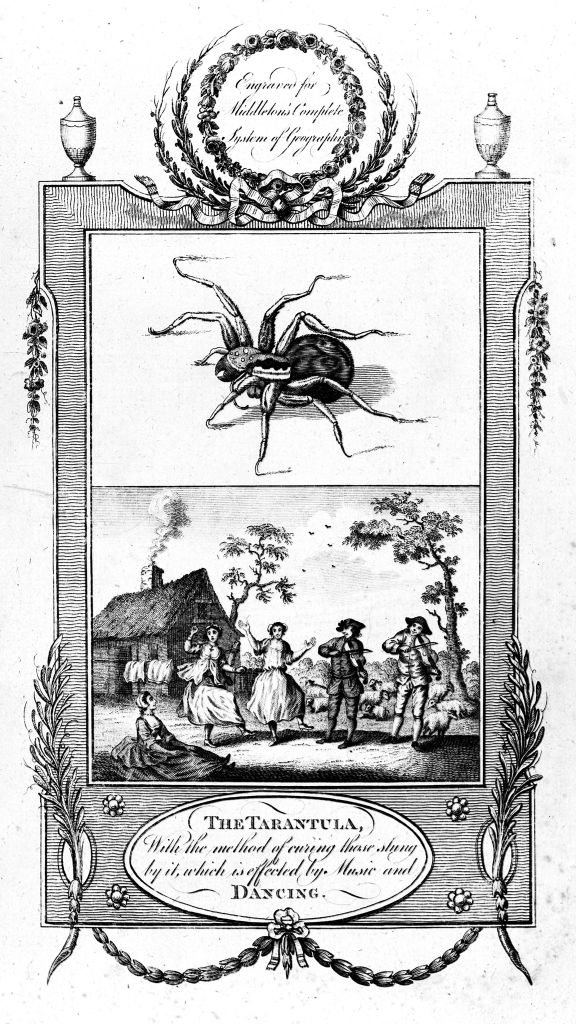
Amongst the dancing manias, tarantism is an especially interesting variant since it both had a reputed clear cause and cure. Occurring following the bite of a spider, in particular the tarantula (or sometimes scorpion), it was repeatedly triggered by hot weather and could only be remedied by dancing.
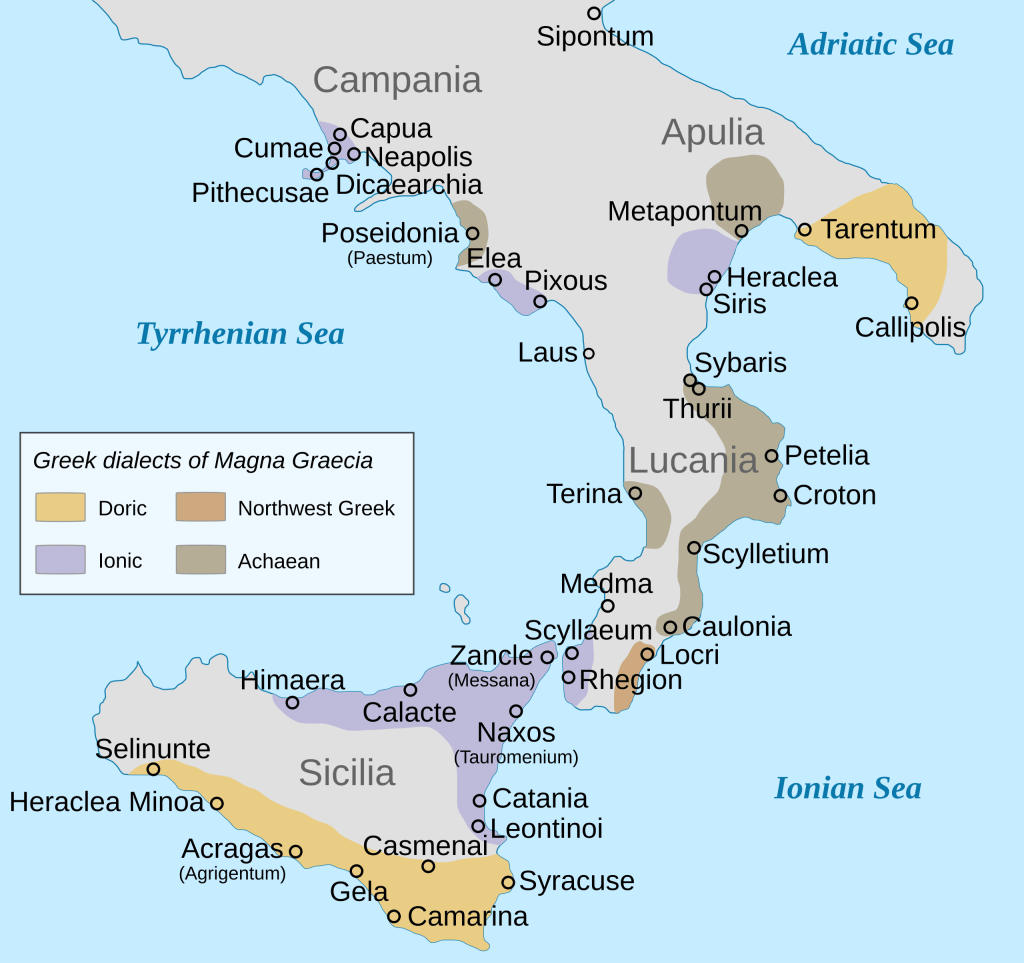
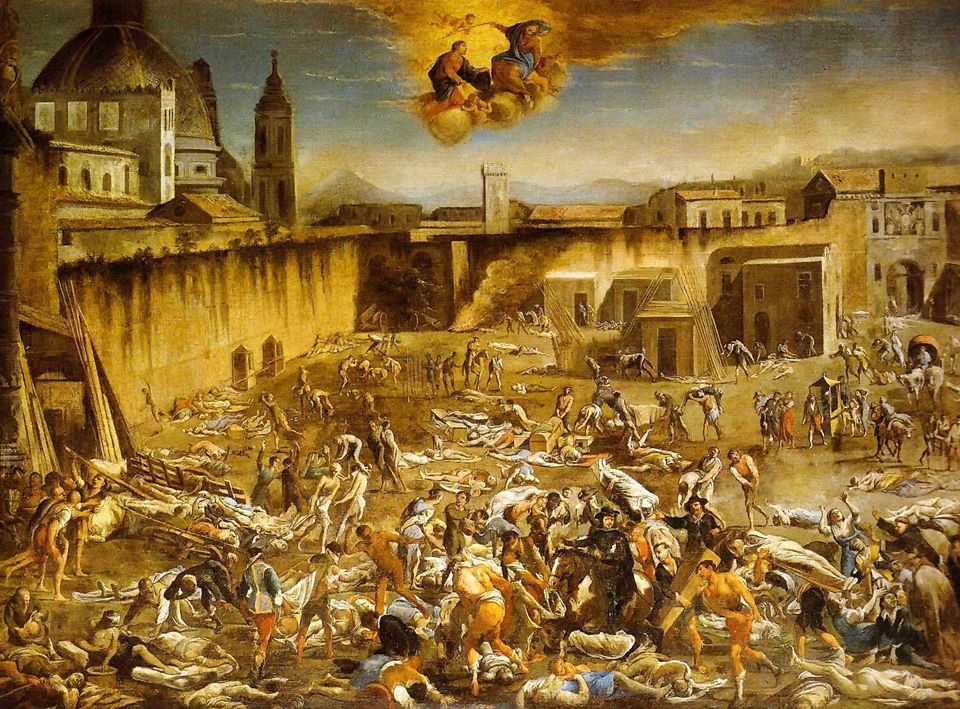
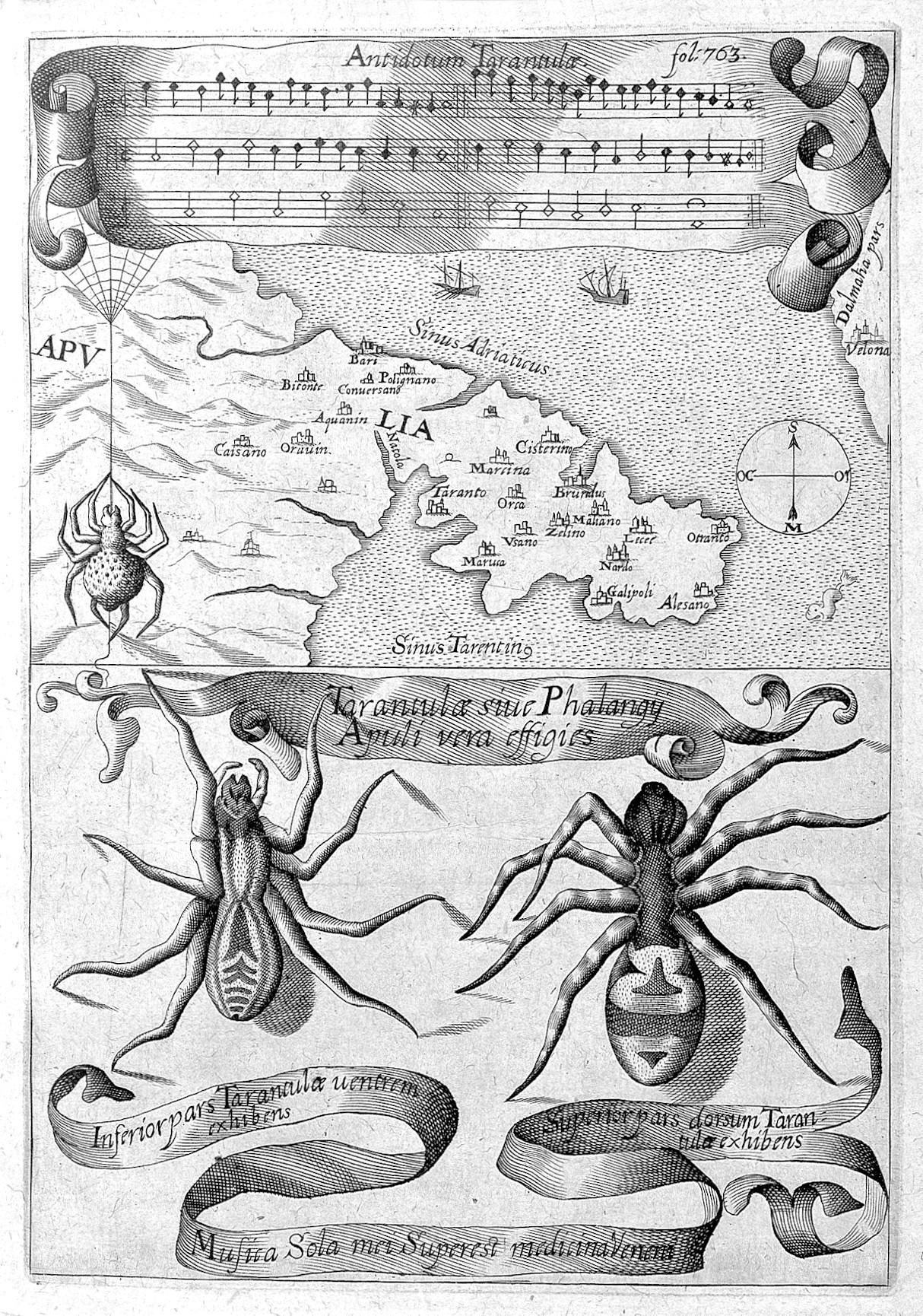
Tarantism appeared and was largely (but not exclusively) confined to Apulia, a region in southern Italy. The history of the region is both interesting and perhaps relevant. Taranto, one of the coastal cities in the region, was founded in the 8th century BC during a period of Greek colonisation and became an important commercial port (known as Taras) in the Magna Graecia. Following Roman conquest it was called Tarentum. Changing hands between a number of different civilizations between the 6th and 10th centuries, Normal conquest resulted in Bohemond I eventually becoming the Prince of Taranto in 1089. A departure point for the Crusades, port cities were also where infectious diseases were readily disseminated. Italy as a whole was repeatedly ravaged by plagues throughout the rest of the Middle Ages.
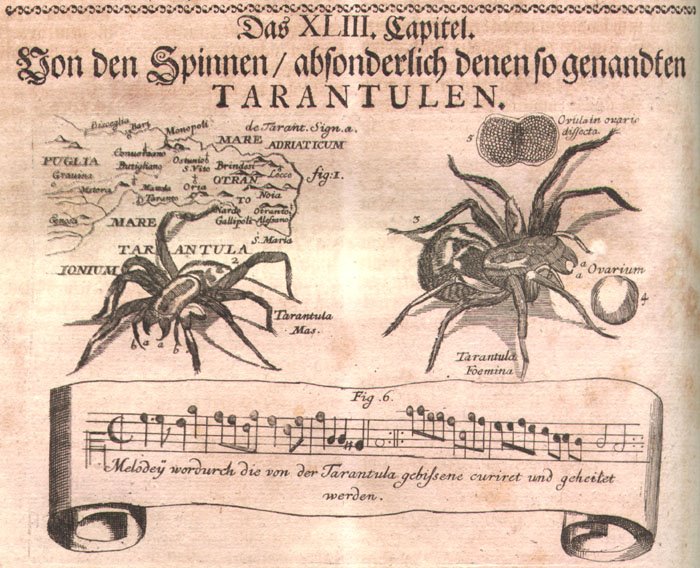
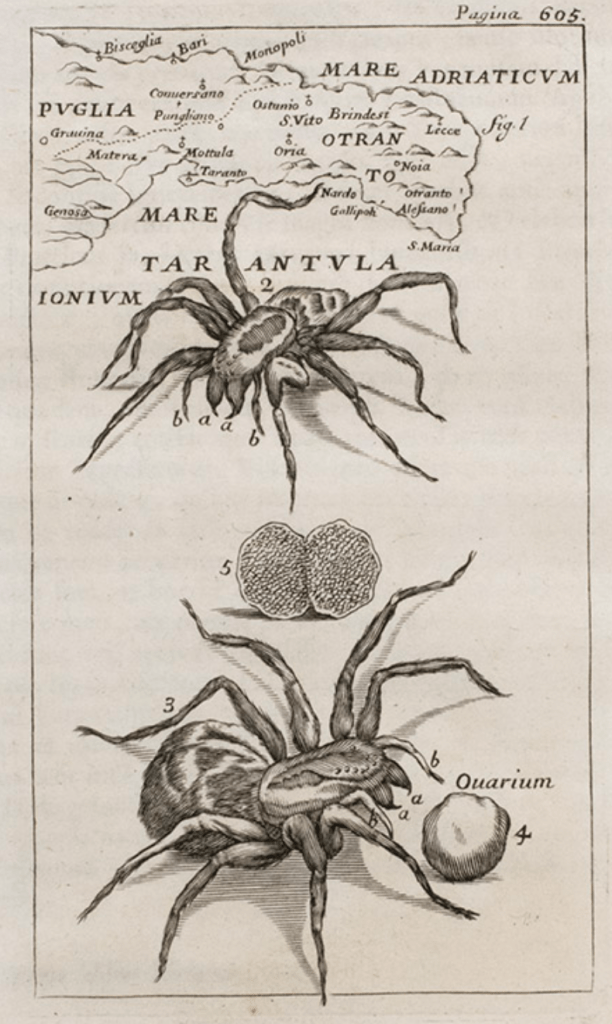
The name tarantula derives from the region. The spider is indigenous to the Apulia area and it is reported that due to deforestation, tarantulas were present in “plague proportions” by the 14th Century. However, a word on terminology and classification. The tarantula we know of today is not the tarantula of Apulia. The Apulians were probably referring to Lycosa tarantula which falls within the wolf spider family and is sometimes called the “true tarantula”. They are distinct from the classification of tarantulas we know of today which comprise the Theraphosidae family.
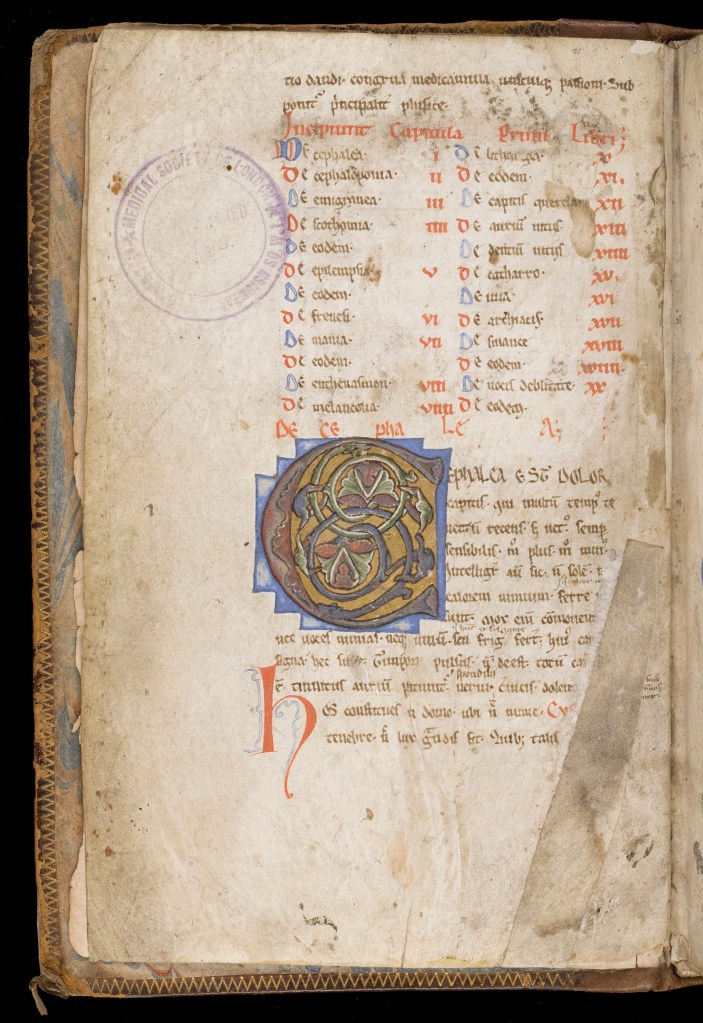
Yet it wasn’t until the physician Gariopontus (died 1050) reported a disease named Anteneasmus that included the irresistible urge to dance as an unusual medical symptom:
“The patients in their sudden attacks behaved like maniacs, sprang up, throwing their arms about with wild movements, and, if perchance a sword was at hand, they wounded themselves and others, so that it became necessary carefully to secure them. They imagined that they heard voices and various kinds of sounds, and if, during this state of illusion, the tones of a favourite instrument happened to catch their ear, they commenced a spasmodic dance, or ran with the utmost energy which they could muster until they were totally exhausted.”
Gariopontus seemingly associated the dancing symptom with dog bites rather than with spiders. While the animal may be different, it appears to be an important forerunner of tarantism.
Question
Is the era of the medical compendium over?
By the 15th century the fear of spider bites had increased considerably in Europe with death or severe morbidity often expected as a consequence of being bitten. The reputation of tarantula venom as dangerous seems commonplace. In such circumstances it was hardly surprising that misinformation was rife. There were rumours that the effect of the bite only lasted as long as the spider was alive and that the scar would discolour yearly. Another was that if you crushed a spider with your foot, the poison could penetrate through the sole of the shoe. In any case, spider bites were considered serious.
Summer was the time when spider bites were more common and that the venom was considered most potent. People would wake from sleep feeling a sting or say they were bitten while working the fields. Assuming a tarantula bite, individuals would run into the street searching for musicians. They believed that the poison of the tarantula had spread throughout their body and could only be expelled through sweat. Melancholic as a result of the venom, music and dancing were the only known remedies. Thousands of sufferers, unable to hire the instrumentalists are said to have drowned themselves.
Indeed, even people who had been bitten in previous years would join in. There was an additional belief that if even the slightest amount of venom remained in the body from a historic bite, the summer heat could awaken a “recollection of the dances of the preceding year”. The afflicted patients were known as the tarantati and music was the only remedy:
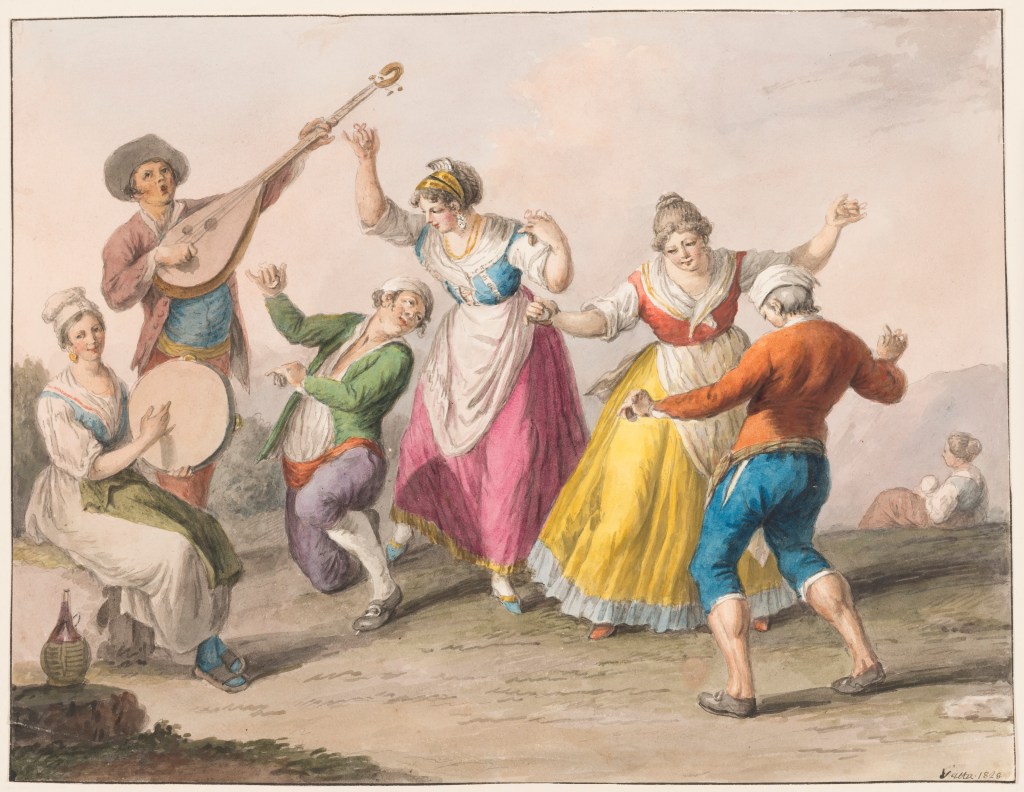
“Nothing but the flute or the cithern afforded them relief. At the sound of these instruments they awoke as it were by enchantment, opened their eyes, and moving slowly at first, according to the measure of the music, were, as the time quickened, gradually hurried on to the most passionate dance. It was generally observable that country people, who were rude, and ignorant of music, evinced on these occasions an unusual degree of grace, as if they had been well practised in elegant movements of the body; for it is a peculiarity in nervous disorders of this kind, that the organs of motion are in an altered condition, and are completely under the control of the over−strained spirits. Cities and villages alike resounded throughout the summer season with the notes of fifes, clarinets, and Turkish drums; and patients were everywhere to be met with who looked to dancing as their only remedy.”
Unsurprisingly perhaps, relapses every summer in the hot weather were common. Indeed, every year the number afflicted could increase since the spider poison could persist in the body and reactivate in the heat. Some patients are reported to have recurrences that lasted decades. The annual periodicity of tarantism lended itself to became a festival of sorts, even anticipated by the population with, as Hecker states, with “impatient delight”:
“The number of those affected by it increased beyond all belief, for whoever had either actually been, or even fancied that he had been, once bitten by a poisonous spider made his appearance annually wherever the merry notes of the tarantella resounded… and thus the cure of the tarantati gradually became established as a regular festival of the populace, which was anticipated with impatient delight.”
What conditions show classic seasonal variability?
The tarantati would dance in bright colours or in no clothing at all. They would fly into a violent rage if they saw colours that they disliked. Sigerist reports that those dressed in black clothing were attacked. Russell states that metallic colours would excite the dancers.
There was ongoing debauchery all while dancing to the music. It was the Middle Ages after all. Clothes moistened in wine were wrapped around the body. Drinking large quantities of wine was common and was probably responsible for at least some of the behaviour:
“After drinking large quantities of wine, many in utter despair, would throw themselves into pits, while a number enjoyed running, many liked being tossed in the air, rocked in cradles, placed in swings, or being hit on the soles of the feet, while a few would strike themselves relentlessly. Some would dance in the heat, and call for swords and mirrors to flash, while a number would toll the funeral bell, gnash their teeth, howl, tear their hair, or roll in the dirt.”
Hydrophillia was also noted, with a desire for water, weather that be carrying it around while dancing or travelling to the waves of the open sea. As a modern physician, I suspect that the hard dancing in the hot weather probably induced thirst rather than the phenomenon being a counterexample of the hydrophobia noted in rabies. Nevertheless, it was deemed a notable feature of tarantism for some patients.
At the time, it was accepted that the only way to help those affected with tarantism was through music. Unsurprisingly, musicians were therefore in great demand during this time. Indeed, there are reports that afflicted people would die if music was unavailable. Luckily (or perhaps with careful planning), musicians were generally available and usually on tour during the summer months, moving from town to town providing relief to the hoards of Tarantati.
Some argued that it was the music rather than the heat that reactivated the venom. The consensus as to whether it was the spider venom, the heat or the music that caused the symptoms is unclear from the texts. However, before we despair too much, we must remember that with our modern molecular lens, all these causes lack biological plausibility.
Questions
How do you view conditions that lack of biological plausibility?
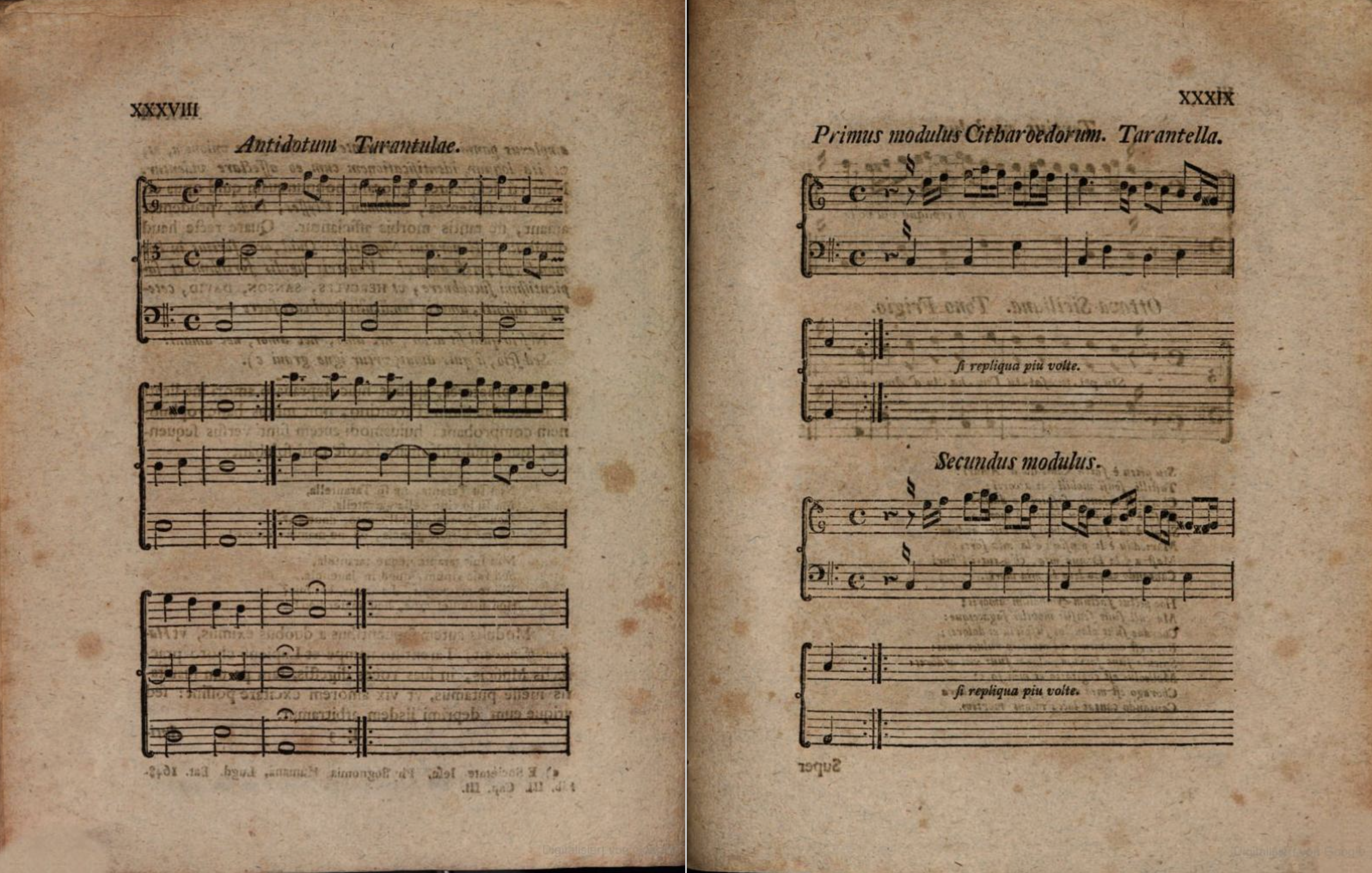
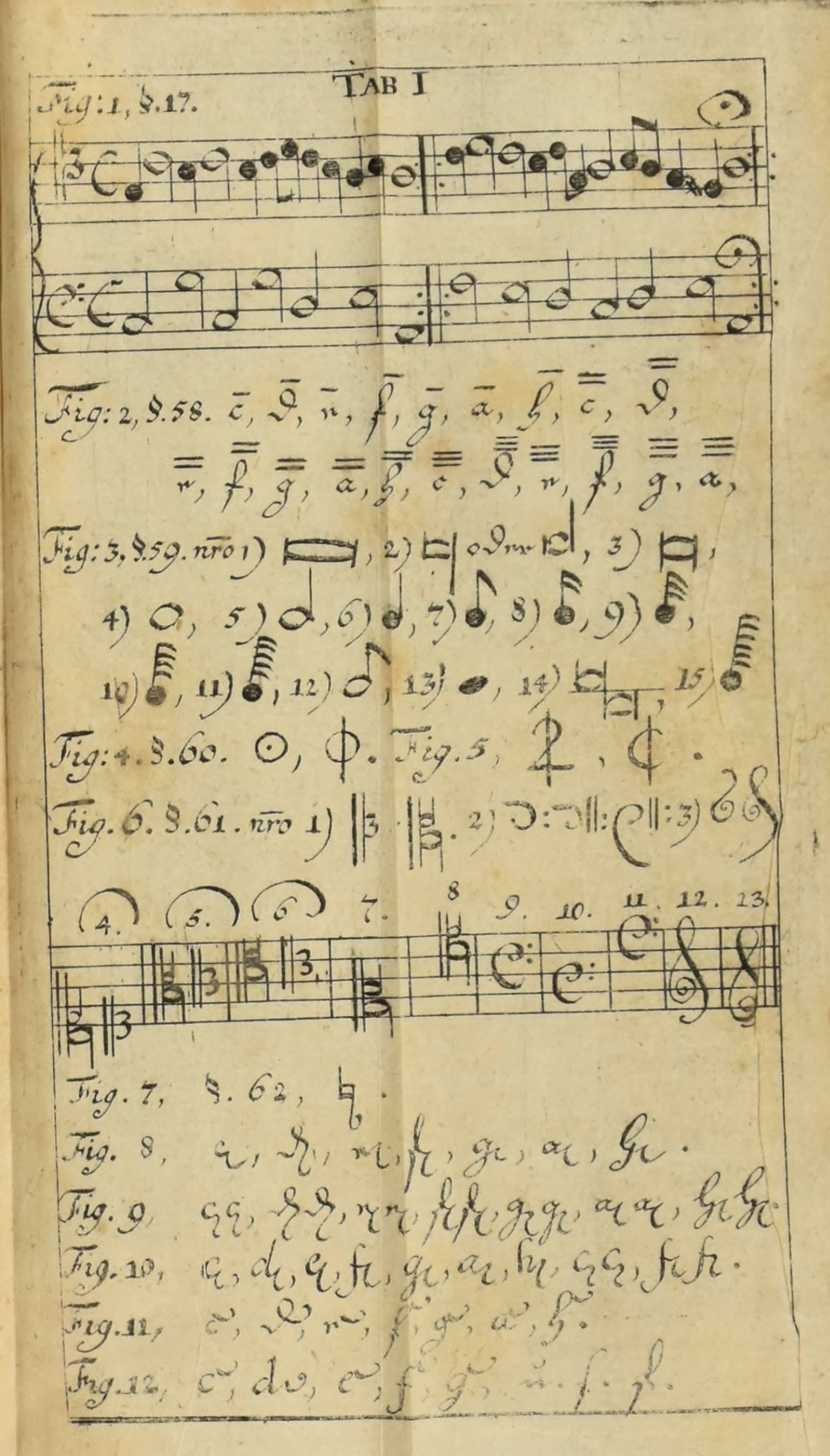
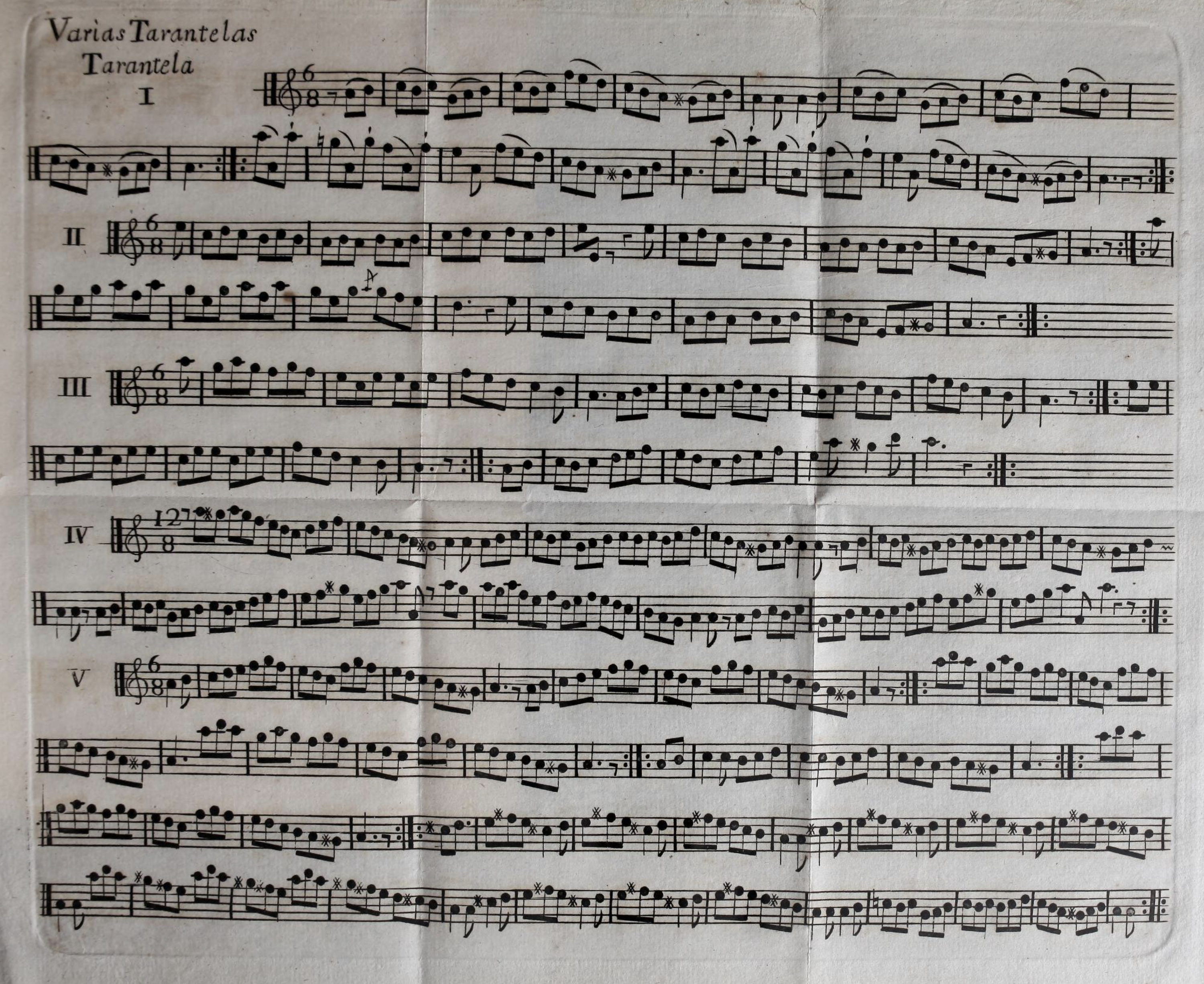
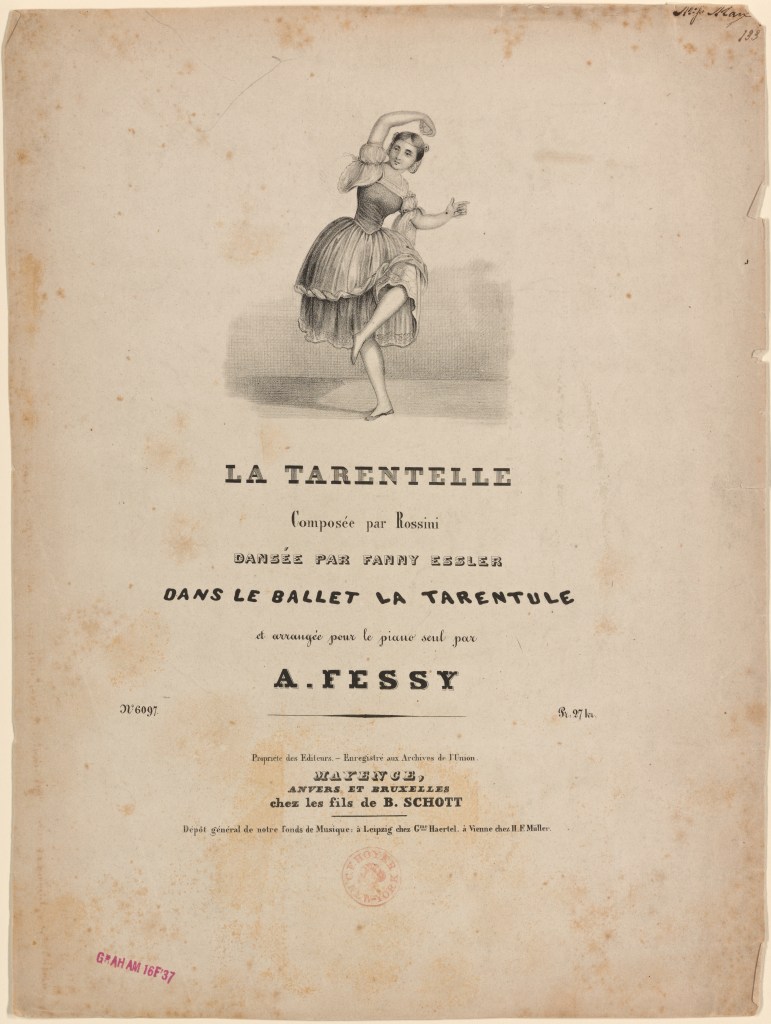
The music that helped relieve the symptoms was repetitive, uptempo and uninterrupted. It was perfect for dancing and is known as the tarantella. You can hear a sample here.
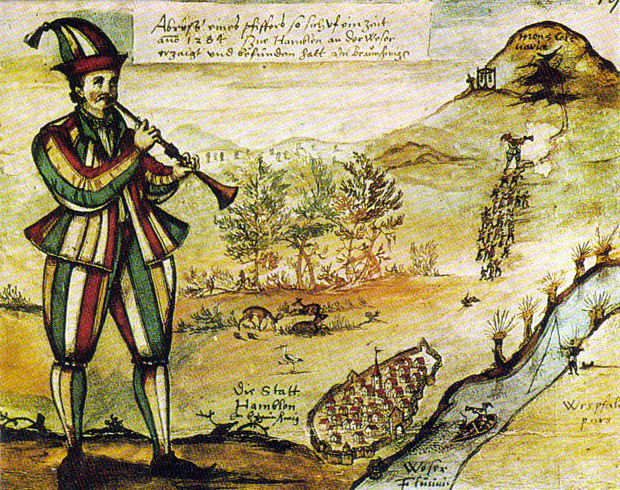
The Pied Piper of Hamelin is a folktale where the rats (and subsequently the children) of a town are lured away through music played on a pipe. It has been suggested that the Piper was a symbol of hope in the context of plague or an interpretation of the plague itself. Alternatively the Piper has been linked to the disappearance of children through dancing mania. Indeed, in the year 1237, a dancing mania is said to have affected over a 100 children in the town of Erfurt. Many children apparently died and those who survived are reported to have been left with a persistent tremor. Source: https://en.wikipedia.org/wiki/Pied_Piper_of_Hamelin#/media/File:Pied_piper.jpg
It has been suggested that they are perhaps fragments of ancient Greek melodies passed down through generations at Taranto. There were many variations for the different moods of the affected. For example, compositions existed for those who were excited by the colour green, or those who had an affinity for water. Patients too had their preferences and would become symptomatic, even violent, should the music not meet their desires. For example, any pause, slowness of tempo or out of tune note could cause their melancholy to return. As Hecker points out: “it was better to pay a few extra musicians, who might relieve each other, than to permit the patient, in the midst of this curative exercise, to relapse into so deplorable a state of suffering.”
The tarantellas were not only instrumental, but could have vocals too. Many of the songs have been lost, but some fragments have been preserved (taken from Sigerist):
Allu Mari mi portati
Se voleti che mi sanati
Alli Mari, alla via:
Cosi m’ama la Donna Mia
Allu Mari, allu Mari;
Mentre camp, t’aggio amari.
Carry me to the sea if you wish to cure me. To the sea, to the sea, thus my beloved loves me. To the sea, to the sea, as long as I live I shall love thee.
Non fù Taranta, nè fù la Tarantella,
Ma fu lo vino della garratella.
Dove te mozicò dill’amata dove fù,
Ohime si fusse gamma, ohime mamma, ohime.It was neither a big nor a small tarantula; it was the wine from the flask. Where did it bite you, tell me, belloved, where was it. Oh, if it was your leg, oh mamma!
Some songs had a erotic and highly repetitive nature. Indeed, the sexual nature of the dances and therefore the disease is noted by many authors including the behaviour of avoiding intercourse in anticipation to experience a more intense deliramenta when the symptoms manifested.
Deu ti mussicau la Tarantella?
Sotto la Pudia della vanella.
Where did the tarantula bite you? Under the fringe of the skirt.
The purpose of the music was to stimulate the patient to dance and sweat and therefore drive out the poison or at least disperse it. Dancing would begin at sunrise and stop about noon. Patients would then cover up in bed and sweat, have a bath and return to the dance until the evening at which point they would go to bed again for another sweat, have a light meal and go back to bed for the night. This pattern of behaviour would repeat for another few days (sometimes weeks). One author has likened it to the rave scene of the 1990s. Anyway, this ritual would relieve them for at least a year until the poison was reactivated.
The peak of the tarantellas appears to have been between the 15th and 17th centuries. Interestingly, the tarantella has experienced a modern revival.
Question
What is the relationship between traditional dance and wellbeing?
The whole performance was sometimes called Il Carnevaleto delle Donne (the women’s small carnival) since women appeared more likely to be affected by tarantism and to spend money on paying the musicians. The repeated focus on the susceptibility of women to tarantism is one that is highlighted in many of the historical texts. Hecker perhaps sees the true underlying issue here, outlining the miserable existence that many women of the time were forced to endure:
“Let us here pause to consider the kind of life which the women in Italy led. Lonely, and deprived by cruel custom of social intercourse, that fairest of all enjoyments, they dragged on a miserable existence. Cheerfulness and an inclination to sensual pleasures passed into compulsory idleness, and, in many, into black despondency. Their imaginations became disordered – a pallid countenance and oppressed respiration bore testimony to their profound sufferings. How could they do otherwise, sunk as they were in such extreme misery, than seize the occasion to burst forth from their prisons and alleviate their miseries by taking part in the delights of music?”
Il Carnevaleto delle Donne offered an opportunity for freedom, a release from oppression.
“The Church of Rome could never for a moment have tolerated its existence as an overt possession cult. The bite of the tarantula, whose effects coincide so extraordinarily closely with the signs that herald the onset of possession,provided a providential alibi … Women who gave themselves up to these practices were no longer sinners but unfortunate victims of the tarantula.”
Gilbert Rouget, 1986 (source: Dances with Spiders by Karen Lüdtke)
Of course, it was not only women who were affected by tarantism. Men and women of all ages are reported to have experienced tarantism. Or perhaps as Sigerist says, homines rustici similesque femelle.
Looking back, it all feels very desperate and very real for those involved. Many people struggling with poverty spent considerable amounts of money on musicians. Why would they if they were faking it? Those facing financial difficulties are said to have protracted recurrences. There is even the case of Mita Lupa, a lady who is reported to have used her entire fortune on the festival. Those facing financial difficulties are said to have protracted recurrences.
There is little doubt that the musicians themselves encouraged the party by playing tarantellas at times when people felt most susceptible. Indeed, rather than being viewed as a condition that afflicted more women than men, I would suggest that it was vulnerability itself that was the primary risk factor. Russell states:
“Tarantism is aggravated by a number of factors. It is true to say that it affects the hysterical, the melancholic, the depressed, the frustrated, the neurotic, and the mentally deranged, as well as those leading solitary lives, while the bored, the beggars, the malingerers, the rogues, and the swindlers are also vulnerable… individuals would look forward to this annual carnival of summer madness in the hope of solving their daily problems.”
What are the essential characteristics of a patient?
As would perhaps be expected with such a phenomenon, at least some people simulated the disease to join in the festivities. It is of course difficult to ascertain how many people genuinely felt they were affected by tarantism and how many just got caught up with the revelry.
“Gangs of idle vagabonds, who understood how to imitate to the life the gestures and convulsions of those really affected, roved from place to place seeking maintenance and adventures, and thus, wherever they went, spreading this disgusting spasmodic disease like a plague; for in maladies of this kind the susceptible are infected as easily by the appearance as by the reality.”
Predictably, there were contemporary sceptics who viewed the entire performance as a charade and all those participating as disingenuous. Yet, reports exist that even those who decided to experiment allowing themselves to be bitten by the tarantula or clergymen who resisted following a bite eventually felt compelled to dance. Hecker puts this down to the way (or lack) of thinking in the middle ages:
“Thus it appears that the age was so little favourable to freedom of thought, that even the most decided sceptics, incapable of guarding themselves against the recollection of what had been presented to the eye, were subdued by a poison, the powers of which they had ridiculed, and which was in itself inert in its effect.”
Poverty plus the dark ages seems to be a particularly miserable combination. Subsequent disbelievers such as Cirilo (1739-1799) say that “it is only an invention of the people, who want to get a little money, by dancing when they say the tarantism begins.”
The physicians of the era apparently did attempt to try and understand what was happening. Rabies, ergotism, and sunstroke were all suggested. But why would music and dance help patients with these conditions? More rational scientific investigation was required. Baglivi had a rabbit bitten by the spider and although the rabbit didn’t dance when the music was played, it did die five days later after hearing various different tunes. This episode was considered peculiar since there was a previous report that both a wasp and rooster that had been bitten had been seen dancing. Moreover, even the tarantula danced when it heard the music.
Giorgio Baglivi (1668-1707). Giorgio Baglivi (1668-1707) was a physician who wrote Dissertatio de Anatome, Morsu, et Effectibus Tarantulae in 1695 that contained case studies of taranism. A distinguished doctor, he drew the attention of other physicians to try and understand tarantism. Baglivi compared the climate of Apulia to its populace: “This temperament of the climate is matched by that of the inhabitants; for generally speaking they are of a hot, scorched constitution, with black hair and a brownish or palish skin, meagre, impatient, peevish, watchful, very quick in their way of apprehension, nimble in reasoning and extremely active. They are very subject to ardent fevers, freebies, pleurisies, madness and other inflammatory diseases. Nay, the heat is so excessive in that country, that I have seen several of the inhabitants urged by it to the last degree of impatience and madness.” Perhaps Baglivi was sceptical about the nature of tarantism. Source: https://en.wikipedia.org/wiki/Giorgio_Baglivi#/media/File:Portret_van_Giorgio_Baglivi_op_34-jarige_leeftijd_Georgius_Baglius_aetat._34_(titel_op_object),_RP-P-1909-5657.jpg
Woodcut illustration from ‘The anatomy, the bite and the effects of the tarantula’ by Baglivi.
Physicians took the tarantula to other parts of the country, but it did not appear to be venomous outside of Apulia. One Neopolitan doctor even allowed himself to be bitten by two tarantulas in 1693 (in the presence of witnesses), but only noticed a minor swelling at the site of the bite.
Question
Can you think of any other examples where physicians have experimented on themselves?
Other physicians instead tried to treat the condition by extracting the spider venom, cauterising the area, or using basic pharmacological methods such as brandy and treacle. However, many patients did not have a bite mark or had been bitten in a previous season. Another option was to encourage the venom to be excreted through the sweat, so diaphoretics to induce perspiration were tried but without any result. Music appeared to be the only remedy. Baglivi went so far as to suggest that the swift music itself impressed the air and communicated to the skin of the patient where the vibrations dispelled the venomous effect, allowing the patient to move and sweat, therefore carrying with it the poison. Along the same lines, the English physician Richard Mead suggested that the vibrations relieved tension on the elastic fibres of the brain. The tarantella was ideally suited to induce this process. Of course, subsequent physicians proposed their own theories and variations.
“By writing on tarantism, the physician could advocate his own philosophical allegiance and demonstrate its ability to account for new medical phenomena. Rather than being concerned with treating ailing patients, the early modern physician was eager instead to explain the forces of nature at work in the world.”
Martha Baldwin, 1997 (source: Dances with Spiders by Karen Lüdtke)
Richard Mead (1673-1754) was a wealthy English physician with an interest in transmissible disease. He describes the patients of Apulia in the following way: “Their temperament is dry and adjust, as appears by their being generally lean, passionate, impatient, ready to action, quickwitted, very subject to inflammatory distempers, phrensies, melancholy, and the like: upon which account there are more mad people in this, than in all the other parts of Italy.” Source: https://en.wikipedia.org/wiki/Richard_Mead#/media/File:Richard_Mead_2.jpg
Unable to find a clear cause and designating tarantism as a fiction, many physicians and authors seemingly redirected their frustrations by using a derogatory tone to describe the populace of the Apulia region during the time of tarantism. Suffice to say I feel this framing is both unwarranted and unnecessary. It is not as if the region was the only rural area, the only population to harbour superstitions, or unique in its struggle with poverty. As we all know, poverty does play a role in illness. Even physicians and healthcare systems today filter out the wider social contributors of illness which are more difficult to manage than the acceptable and definable molecules of disease. This can often be seen in the approach taken when patients present with persistent physical symptoms.
There is no doubt that cultural context is and will always be an important facet of understanding illness. Sigerist and Russell suggest that the Greek tradition and its historic influence on Apulia had a role to play. The Cult of Dionysos, music, dancing, bright clothes, and wine are the connection. Christianity arrived late to Apulia and had to adjust to win over the population. Perhaps some of the Dionysian Mysteries persisted in secret. The efforts of the Church to eradicate these persisting pagan leftovers eventually changed the meaning of the dances:
“The old rites appeared as symptoms of a disease. The music, the dances, all that wild orgiastic behaviour were legitimised and even become a significant economic factor. The people who indulged in these exercises were no longer sinners but the poor victims of the tarantula.”
Hecker says: “Tarantism, as a real disease, has been denied in toto, and stigmatized as an imposition, by most physicians and naturalists who in this controversy have shown the narrowness of their views and their utter ignorance of history.” Combined with the repeated horrors of plague of the preceding centuries, Hecker suggests that that population were “morbidly sensitive” where the most trivial medical issue would be magnified into severe illness. Sigerist regards it as a strange neurosis. Lanska writes: “In reality, dancing manias did not have a single cause, but component causes likely included psychogenic illness, malingering, and ritualized behaviors.”
Tarantism was real but was it a real disease? It could have been a manifestation of multiple factors: the frustrations of the Middle Ages, the context of repeated serious epidemics that scarred the psyche, the Dionysian traditions introduced in antiquity, and individual vulnerability. The only effective treatment was music and dance. Does that make it a medical issue or does medicine have limits?
Further resources
Russell JF. Tarantism. Med Hist. 1979 Oct;23(4):404-25. doi: 10.1017/s0025727300052054. PMID: 390267; PMCID: PMC1082580. https://pubmed.ncbi.nlm.nih.gov/390267
Lanska DJ. The Dancing Manias: Psychogenic Illness as a Social Phenomenon. Front Neurol Neurosci. 2018;42:132-141. doi: 10.1159/000475719. Epub 2017 Nov 17. PMID: 29151097. https://pubmed.ncbi.nlm.nih.gov/29151097/
Gloyne HF. Tarantism; mass hysterical reaction to spider bite in the Middle Ages. Am Imago. 1950 Mar;7(1):29-42. PMID: 15413592. https://pubmed.ncbi.nlm.nih.gov/15413592/







 UNEXAMINED MEDICINE


.jpg)


.jpg)


,_RP-P-1909-5657.jpg)